Is Your Back or Neck Pain Coming From a Worn-Out Disc?
If your back or neck hurts more after sitting, bending or lifting, and it has been building for months or years, aging spinal discs may be the cause. At American Neurospine Institute in Frisco, TX, our neurosurgeons diagnose degenerative disc disease and build a plan around how you live. For most patients that starts with conservative care, and surgery is reserved for the cases that truly need it. If you’ve been searching for a degenerative disc disease specialist near me, call (972) 806-1188 and we’ll help you find out what’s driving your pain.
What Is Degenerative Disc Disease?
Degenerative disc disease is the gradual breakdown of the cushioning discs between your vertebrae. Over time these discs lose water, get thinner and can develop small tears, which can cause pain, stiffness and pressure on nearby nerves. Despite the name, it is not truly a disease. It describes age-related wear on the spine that causes symptoms in some people and not in others.
Each disc has a tough outer ring and a gel-like center. As the outer ring weakens, the disc can bulge or tear, a problem we also treat as an annular disc tear. When the inner material pushes through, it becomes a herniated disc. As discs flatten, the spine often responds by forming bone spurs and developing spinal arthritis, and both can narrow the spaces that nerves pass through.
Where Does Disc Degeneration Usually Happen?
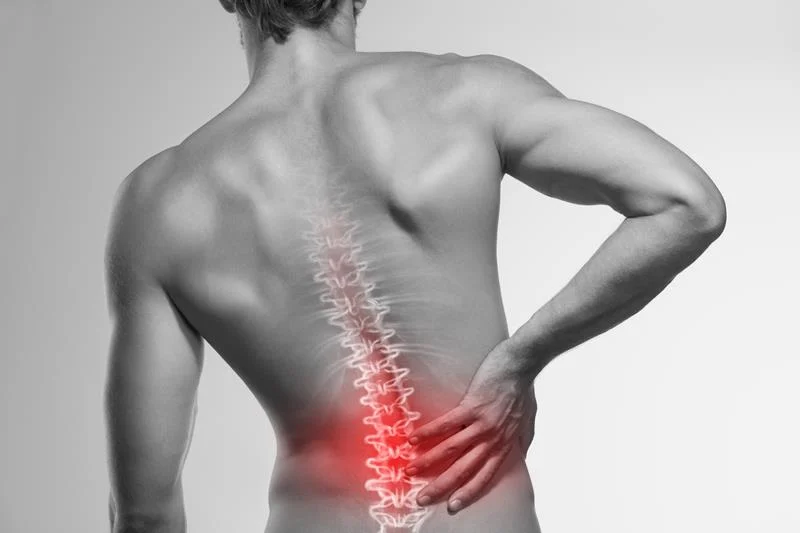
The lower back (lumbar spine) and the neck (cervical spine) move the most, so they wear the fastest. Lumbar degeneration often causes low back pain that can travel into the hips and legs. Cervical degeneration can cause neck stiffness, headaches and pain or tingling that runs into the shoulders and arms. You can learn more about related problems on our back conditions and neck conditions pages.
What Causes Spinal Discs to Break Down?
Age is the main factor, but it isn’t the only one. Repetitive heavy lifting, past injuries, smoking, excess body weight, poor posture and family history can all speed up disc wear. Some patients first notice symptoms after a minor strain or sports injury sets off a disc that was already weakened.
Can Degenerative Disc Disease Lead to Other Spine Problems?
Yes. As discs lose height, the openings for your nerve roots can shrink and cause foraminal narrowing or spinal stenosis. A compressed nerve can then cause radiculopathy, including the shooting leg pain known as sciatica. When wear spreads across several levels, it is often called degenerative spinal disease.
What Are the Signs You Need Degenerative Disc Disease Treatment?
- Ongoing pain: Back or neck pain lasting more than a few weeks, often worse with sitting, bending or twisting.
- Flare-ups: Periods of intense pain followed by stretches of milder discomfort.
- Radiating pain: Pain, numbness or tingling that travels into the arms, buttocks or legs.
- Stiffness: Reduced flexibility and trouble with daily tasks such as getting dressed or driving.
- Weakness: Grip weakness, foot drop or trouble with balance, which can mean nerve compression.
- Relief with movement: Pain that eases when you walk or change positions often.
Sudden loss of bladder or bowel control, or rapidly worsening leg weakness, needs emergency care right away.
How Do Our Frisco Neurosurgeons Treat Degenerative Disc Disease?
Treatment for degenerative disc disease usually begins with non-surgical care such as physical therapy, medication and targeted injections. Surgery is considered only when pain or nerve symptoms continue after conservative treatment. Your plan starts with a detailed exam and a review of your imaging, which we explain on our first visit page.
Non-Surgical Options
Many patients improve with physical therapy to strengthen the core and the muscles that support the spine, along with activity changes and weight management. Our pain management services can include anti-inflammatory medication and image-guided facet block injections to calm painful joints and help you stay active during rehab. A spinal brace may also give short-term support during a flare-up.
When Is Surgery Recommended?
If symptoms continue after several months of conservative care, or if nerve compression is causing weakness, surgery may be the right next step. Depending on where the damaged disc is and how many levels are affected, options include minimally invasive surgery, artificial disc replacement to keep motion in the spine, ACDF for the neck, or spinal fusion to stabilize a painful segment. If you’re weighing two approaches, our article Is artificial disc replacement better than spinal fusion? walks through the differences.
Why Choose a Neurosurgeon for Disc Degeneration?
Dr. Ripul Panchal and Dr. Joshua Crooks focus on the spine and the nerves that run through it. That training matters when disc wear starts affecting nerve roots or the spinal cord. Our team offers the full range of care in one practice, from conservative treatment to advanced computer-assisted surgery, so you get a recommendation based on your condition rather than on a single type of procedure.
Questions About Degenerative Disc Disease
Is degenerative disc disease a serious condition?
For most people, degenerative disc disease is manageable and does not get dramatically worse. It becomes more serious when worn discs press on nerves or the spinal cord and cause numbness, weakness or balance problems. Those symptoms should be checked by a spine specialist promptly.
Can degenerative disc disease heal on its own?
Worn discs don’t regenerate, but symptoms often improve on their own. Many patients find that pain settles over time with exercise, physical therapy and healthy habits, even though the disc changes remain on imaging.
What makes degenerative disc disease worse?
Prolonged sitting, heavy or repetitive lifting, smoking, excess weight and poor posture can all increase stress on aging discs. Staying active with low-impact exercise and building core strength usually helps more than resting.
Do I need surgery for degenerative disc disease?
Most patients don’t. Surgery is usually considered only when pain continues after several months of conservative care, or when nerve compression causes weakness or loss of function. Our neurosurgeons will explain every option before recommending a procedure.
How is degenerative disc disease diagnosed?
Diagnosis combines a review of your symptoms, a physical and neurological exam, and imaging such as X-rays or MRI. Imaging shows disc height, hydration and any nerve compression, which helps us match the findings to your pain.
Is artificial disc replacement an option for degenerative disc disease?
For some patients, especially those with degeneration at one or two levels in the neck or lower back, disc replacement can relieve pain while preserving motion. Whether you’re a candidate depends on your anatomy, bone quality and the health of the joints around the disc.
Where can I find a degenerative disc disease specialist near me in Frisco?
American Neurospine Institute is located at 13136 Dallas Parkway, Suite 540A, in Frisco, TX, and sees patients from Frisco and the surrounding North Texas communities. Call (972) 806-1188 to schedule a consultation.
Ready to Move With Less Pain?
You don’t have to accept worn discs as a life sentence of back or neck pain. Call (972) 806-1188 or request a visit online to meet with our Frisco neurosurgery team and get a clear plan for your spine.
