Is a Bone Spur Behind Your Neck or Back Pain?
If stiffness, aching or tingling into your arms or legs keeps getting worse, a bone spur may be crowding a nerve in your spine. At American Neurospine Institute in Frisco, TX, our neurosurgeons find out exactly where the spur is and whether it is causing your symptoms. Then we build a plan that starts with the most conservative options. If you have been searching for a bone spur specialist near me, call (972) 806-1188 or book online.
What Is a Bone Spur in the Spine?
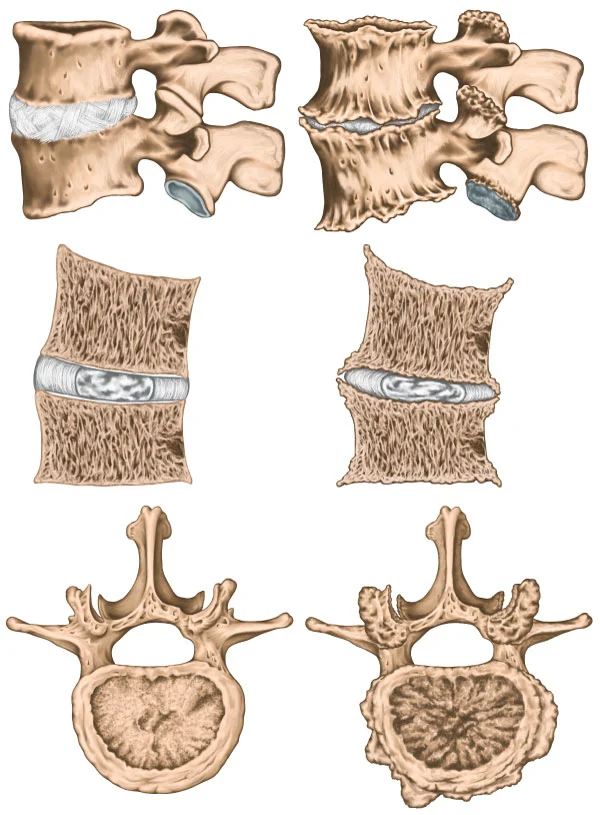
A bone spur, also called an osteophyte, is a smooth, bony growth that forms along the edges of the vertebrae or the small facet joints of the spine. Spurs usually develop slowly as the body tries to stabilize joints that are wearing down with age, arthritis or disc degeneration. Many spurs never cause pain. Symptoms start when a spur narrows the space around the spinal cord or a nerve root.
What causes bone spurs to form?
The most common cause is arthritis of the spine. As cartilage thins and discs lose height, the vertebrae shift and rub. The body responds by laying down extra bone. Degenerative disc disease and broader degenerative spinal disease speed up this process. So can past injuries, poor posture, repetitive heavy lifting, genetics and inflammatory conditions such as spondylitis.
Why do bone spurs cause nerve pain?
When a spur grows into the openings where nerves exit the spine, it causes foraminal narrowing. That can lead to a pinched nerve or radiculopathy, which sends pain, numbness or weakness into an arm or leg. When spurs crowd the central canal, they contribute to spinal stenosis. In the neck, this can press on the spinal cord itself and cause cervical myelopathy.
Where do spinal bone spurs usually develop?
Spurs are most common in the neck (cervical spine) and lower back (lumbar spine), because these areas move the most. Cervical spurs often show up as neck pain, headaches or arm symptoms. Lumbar spurs tend to cause back pain, sciatica or leg pain that gets worse with walking or standing.
How do we diagnose bone spurs?
Your visit begins with a detailed history and a neurological exam that checks strength, reflexes and sensation. X-rays show the spurs themselves. An MRI or CT scan shows whether they are pressing on nerves or the spinal cord. This step matters because finding a spur on imaging does not always mean it is the source of your pain.
What Symptoms Suggest a Bone Spur Needs Treatment?
- Neck or back pain that lingers or keeps returning
- Stiffness and reduced range of motion
- Pain, tingling or numbness radiating into the arms or legs
- Weakness in the hands, arms or legs
- Leg pain or heaviness that eases when you sit or bend forward
- Clumsiness, balance problems or trouble with fine hand movements
Sudden weakness, loss of bladder or bowel control, or rapidly worsening numbness needs emergency care right away.
How Are Spinal Bone Spurs Treated?
We treat the symptoms and the nerve pressure, not just the spur on the scan. Most patients improve without surgery.
Non-surgical care
First-line care often includes activity changes, anti-inflammatory medication and physical therapy to improve posture, core strength and flexibility. Through our pain management services, targeted options such as facet block injections can calm inflamed joints and nerves so you can stay active while you heal.
Surgical options
If nerve compression keeps progressing or conservative care fails, surgery may be recommended. A foraminotomy widens the nerve opening, and a laminotomy or laminectomy relieves pressure on the spinal canal. Whenever possible, our surgeons use minimally invasive surgery for smaller incisions and a faster recovery. When decompression leaves the spine unstable, spinal fusion may be added.
Why patients choose our Frisco team
Our board-certified neurosurgeons, Dr. Ripul R. Panchal and Dr. Joshua Crooks, focus on the brain and spine. They give you an honest answer about whether surgery is actually needed. We welcome patients from across Collin and Denton counties, including those looking for a neurosurgeon near Plano or a neurosurgeon near McKinney.
Bone Spur Questions Our Patients Ask
Can bone spurs go away on their own?
No. Once a bone spur forms, it does not dissolve. Symptoms often improve with physical therapy, medication and injections, though, because these calm the inflammation around the nerve. Many people live comfortably with spurs and never need surgery.
Are spinal bone spurs serious?
Most are not. Many people have spurs that cause no symptoms at all. They become serious when they compress the spinal cord or a nerve root and cause weakness, numbness, balance problems or loss of bladder or bowel control. These signs need prompt evaluation by a spine specialist.
What does bone spur pain in the neck feel like?
Cervical bone spurs often cause neck stiffness, a deep ache at the base of the skull, headaches, and pain or tingling that travels into the shoulder, arm or fingers. If the spinal cord is affected, you may notice clumsy hands or an unsteady walk.
When should I see a neurosurgeon for a bone spur?
See a neurosurgeon if your pain lasts more than a few weeks despite rest and home care, or if it spreads into your arms or legs. Weakness, numbness or trouble walking are also reasons to come in. An early evaluation helps protect nerve function.
Does bone spur surgery mean I will need a fusion?
Not always. Many bone spurs can be removed with a decompression procedure such as a foraminotomy or laminectomy, with no fusion needed. Fusion is usually added only when the spine is unstable or a large amount of bone has to be removed.
How long is recovery after bone spur removal?
After a minimally invasive decompression, many patients go home the same day or the next day. Most return to light activity within a few weeks. Recovery takes longer if fusion is part of the procedure, and physical therapy helps you rebuild strength.
Where can I find a bone spur specialist near me in Frisco?
American Neurospine Institute is at 13136 Dallas Parkway, Suite 540A, in Frisco, TX. We see patients from Frisco, Plano, McKinney, Allen, Prosper, Little Elm and nearby communities. Call (972) 806-1188 to schedule a consultation.
Ready to Move Without That Pinch?
You do not have to keep working around nerve pain. Our team will find out whether a bone spur is behind your symptoms and walk you through every option, from therapy to minimally invasive surgery. Call (972) 806-1188 or request your visit online.
