Is Morning Back Stiffness Holding You Back?
Some back pain eases as you move, but it comes back every morning and wakes you up at night. That pattern can point to spondylitis, an inflammatory spine condition. At American Neurospine Institute, Dr. Ripul Panchal and our team help patients in Frisco, TX and across Collin and Denton counties understand what is driving their symptoms. We protect the spine from long-term complications, work alongside your rheumatologist, and step in with advanced surgical care when inflammation has caused fractures, nerve compression or deformity. If you have been searching for a spondylitis specialist near me, call (972) 806-1188 to schedule a visit.
What Is Spondylitis?
Spondylitis is a chronic inflammatory form of arthritis that mainly affects the spine and the sacroiliac joints where the spine meets the pelvis. The most common type is ankylosing spondylitis, part of a larger group called axial spondyloarthritis. Over time, ongoing inflammation can cause new bone to form between the vertebrae. This can stiffen the spine, reduce flexibility and, in advanced cases, fuse segments together. Unlike the wear-and-tear changes of spinal arthritis, spondylitis is driven by the immune system and often begins in early adulthood.
The National Institute of Arthritis and Musculoskeletal and Skin Diseases notes that genetics play a strong role, especially the HLA-B27 gene. Not everyone who carries it develops the condition.
How Is Spondylitis Different From Ordinary Back Pain?
Most mechanical back pain gets worse with activity and better with rest. Inflammatory back pain usually works the other way. Signs that point toward spondylitis include:
- Back pain that starts gradually before age 45
- Morning stiffness that lasts longer than 30 minutes
- Pain that improves with movement or exercise and worsens with rest
- Pain that wakes you in the second half of the night
- Alternating buttock pain linked to sacroiliitis
- Fatigue, heel pain, or eye inflammation (uveitis)
What Complications Can Spondylitis Cause?
When inflammation goes unchecked for years, the spine can change in ways that call for a spine specialist. The upper back may curve forward into kyphosis, which makes it hard to stand upright or look ahead. A stiff, fused spine is also more brittle, so even a minor fall can cause a serious fracture. Patients with spondylitis are also at higher risk for compression fractures from bone thinning. Some develop bone spurs or spinal canal stenosis that press on nerves, which can cause leg or arm pain, numbness or weakness.
How Is Spondylitis Diagnosed in Frisco?
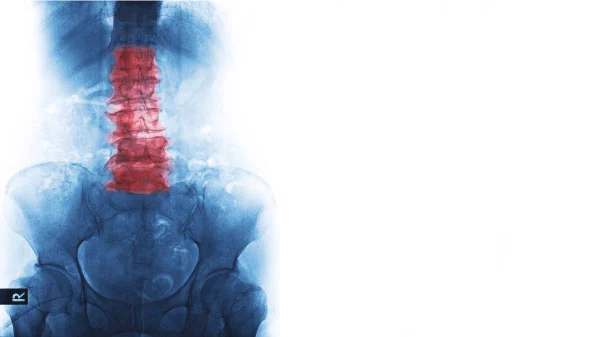
Your first visit starts with a detailed conversation about your symptoms, when they began and what makes them better or worse. Dr. Panchal performs a hands-on exam of spinal motion, posture, chest expansion and nerve function. Imaging may include X-rays to look for sacroiliac joint changes and fusion, and MRI to detect early inflammation before it shows on X-ray. CT scans help when a fracture is suspected. Blood work for inflammatory markers and HLA-B27 is often coordinated with your primary care doctor or rheumatologist.
How Is Spondylitis Treated?
Spondylitis treatment focuses on calming inflammation, keeping the spine flexible and preventing complications. Most patients never need surgery. Your plan may combine several approaches.
Non-Surgical Spondylitis Care
- Anti-inflammatory medication: NSAIDs are often the first step, and a rheumatologist may add biologic medicines that target the immune response.
- Targeted exercise: Guided physical therapy builds posture, mobility and breathing capacity.
- Interventional pain relief: Our pain management options, including facet block injections, can ease flare-ups in specific joints.
- Bone health support: Screening and treatment to lower fracture risk.
Learn more about our full range of non-surgical neurosurgery care.
When Is Surgery Needed for Spondylitis?
Surgery is reserved for structural problems that conservative care cannot fix. These include unstable fractures in a fused spine, severe forward curvature that affects balance and quality of life, and nerve or spinal cord compression. Dr. Panchal performs spinal deformity correction and spinal fusion to stabilize the spine and restore alignment. He uses computer-assisted surgery for precise placement of instrumentation in bone that has been changed by years of inflammation.
Why Choose Our Frisco Spine Specialists for Spondylitis?
Spondylitis affects your whole life, not just your spine. Our neurosurgery providers take time to explain your imaging and outline every option, and we coordinate closely with your other doctors. Patients come to us from Frisco, Plano, McKinney and nearby communities for experienced, conservative-first care. You can also explore the other conditions we treat, from chronic pain to neck pain.
Questions Patients Ask About Spondylitis
What does spondylitis pain feel like?
Spondylitis usually causes a dull, deep ache in the lower back and buttocks along with stiffness. It is typically worst in the morning or after sitting still and gets better with movement. Many people also notice pain that wakes them during the night.
Is spondylitis the same as spondylosis?
No. Spondylitis is an inflammatory, immune-driven condition that often starts in younger adults. Spondylosis refers to age-related wear and tear of the discs and joints. The names sound alike, but the causes and treatments are different.
Can a neurosurgeon treat ankylosing spondylitis?
Yes. A rheumatologist usually manages the underlying inflammation. A neurosurgeon evaluates and treats spinal complications such as fractures, nerve compression, stenosis and forward curvature, and performs surgery when it is needed.
Will I need surgery for spondylitis?
Most people with spondylitis do not need surgery. Medication, exercise and physical therapy control symptoms for the majority of patients. Surgery is considered for unstable fractures, severe deformity or nerve and spinal cord compression.
Why is a fall dangerous if I have spondylitis?
When spondylitis fuses parts of the spine, the bone becomes stiff and brittle, much like a long bone. Even a low-impact fall can cause a fracture that may injure the spinal cord. New neck or back pain after any fall should be checked right away.
Does exercise help spondylitis?
Yes. Regular stretching, posture work and low-impact exercise are among the most effective ways to maintain spinal mobility and reduce stiffness. A guided physical therapy program helps you exercise safely.
How do I find a spondylitis specialist near me in Frisco?
American Neurospine Institute is located on the Dallas Parkway in Frisco and sees patients from across North Texas. Call (972) 806-1188 or request an appointment online to schedule an evaluation.
Ready to Move With Less Stiffness?
You do not have to accept daily stiffness and pain as normal. Call American Neurospine Institute at (972) 806-1188 to schedule a consultation with Dr. Ripul Panchal and get a clear plan for protecting your spine.
