How Can Navigation Technology Make Your Surgery More Precise?
If you’re facing spine or brain surgery, you probably want to know exactly where the surgeon’s instruments will go and how much healthy tissue will be disturbed. Computer-assisted surgery answers both questions. At American Neurospine Institute in Frisco, TX, our neurosurgeons use imaging-based navigation that works like GPS for the operating room. It shows your anatomy and the position of each instrument in real time, so screws, implants and incisions are placed with a high degree of accuracy. For anyone searching for a computer-assisted spine surgeon near me in Collin County, our team is ready to talk through your options. Call (972) 806-1188 to get started.
What Is Computer-Assisted Surgery?
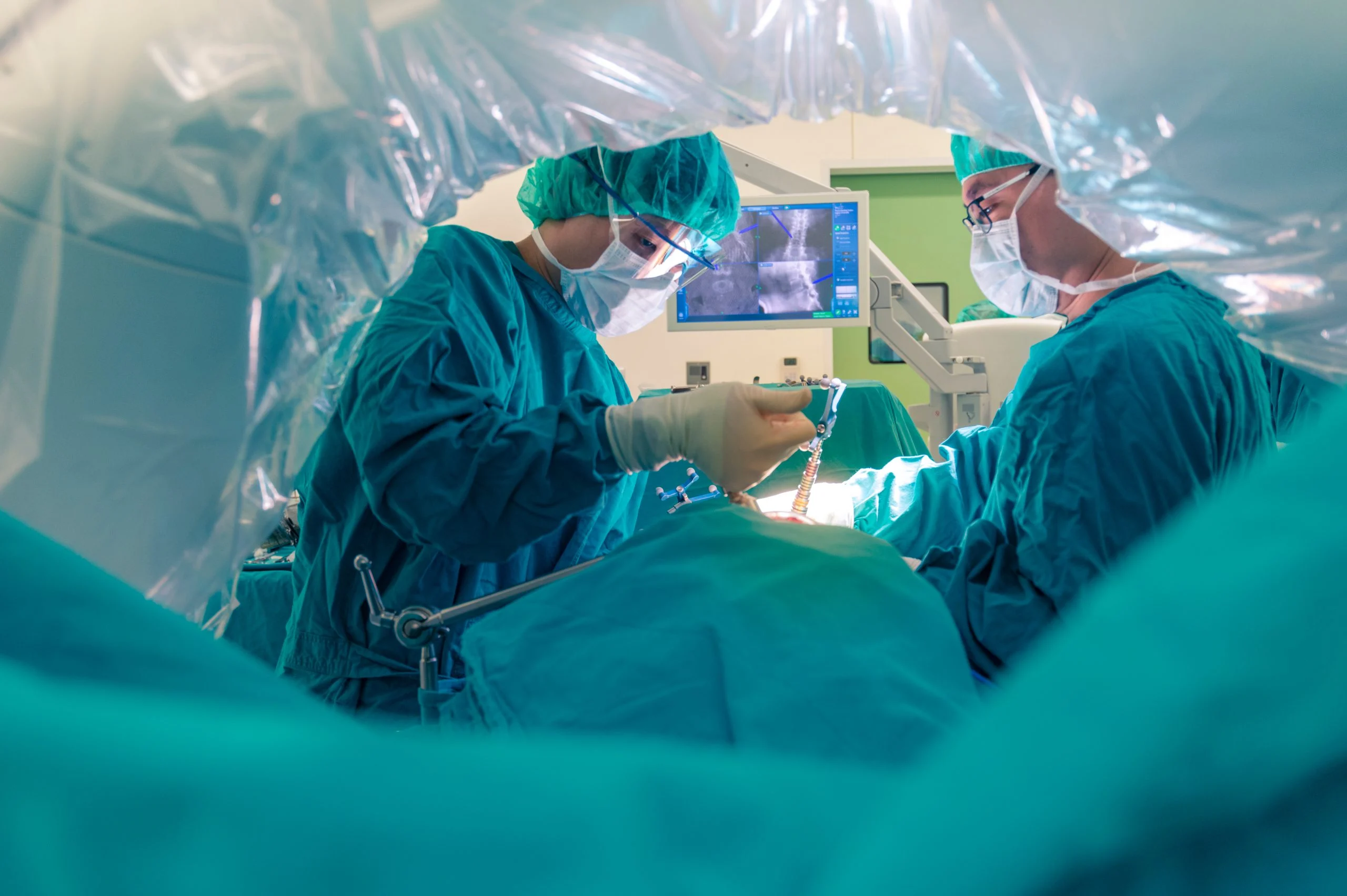
Computer-assisted surgery (CAS), also called surgical navigation or image-guided surgery, uses imaging and tracking software to give the surgeon a live, three-dimensional map of your anatomy during an operation. Before or during the procedure, CT or other images of your spine or brain are loaded into the navigation system. Special cameras then track the instruments and show their exact position on that map. The surgeon can see paths and structures that aren’t visible through a small incision.
This technology supports the surgeon. It doesn’t replace their judgment. Every decision and movement is still made by your neurosurgeon. The computer adds a layer of confirmation that helps them work safely near nerves, the spinal cord, blood vessels and delicate brain tissue. You can learn more about the tools we use on our advanced neurosurgical technology page.
How Does Computer-Assisted Spine Surgery Work?
Step 1: Detailed Imaging
Imaging is captured before surgery, in the operating room, or both. It shows the size, shape and alignment of each vertebra, along with the location of the spinal canal and nerve roots.
Step 2: Registration
The system matches the images to your actual position on the operating table. This lets the instrument tracking line up with your real anatomy.
Step 3: Real-Time Guidance
As the surgeon works, the screen shows where each instrument is and where it’s heading. That’s especially valuable when placing pedicle screws during spinal fusion, because the ideal path can be just millimeters from a nerve.
Step 4: Confirmation
Implant position can be checked before the procedure ends. This helps confirm that hardware is where it should be.
Which Procedures Use Computer-Assisted Navigation?
Navigation is helpful in many of the spine and brain procedures we perform, including:
- Minimally invasive neurosurgery, where small incisions limit direct visibility
- Transforaminal lumbar interbody fusion (TLIF)
- Oblique lumbar interbody fusion (OLIF)
- Anterior lumbar interbody fusion (ALIF)
- Spinal deformity and scoliosis correction, where rotated vertebrae make screw placement harder
- Revision spine surgery, where scar tissue and existing hardware change normal landmarks
- Sacroiliac (SI) joint fusion
- Craniotomy for brain tumors and other intracranial conditions
Who Is a Good Candidate for Computer-Assisted Surgery?
You may benefit from a navigated procedure if surgery requires precise implant placement or your anatomy is complex. Common examples include:
- Complex spinal anatomy: Scoliosis, kyphosis or spondylolisthesis that shifts the normal alignment of the vertebrae.
- Previous spine surgery: Hardware problems such as instrumentation failure or adjacent segment disease.
- Degenerative conditions: Degenerative disc disease or spinal stenosis that needs fusion or decompression.
- Persistent pain: Pain that hasn’t improved with non-surgical care and is linked to a structural problem surgery can correct.
What Are the Benefits of Computer-Assisted Surgery?
- Greater accuracy when placing screws, rods and other implants
- Smaller incisions and less disruption of muscle and soft tissue
- Lower risk of irritating nerves or the spinal cord
- Less need for repeated X-rays during surgery in many cases
- Better visualization in revision and deformity cases
- Support for a quicker, more comfortable recovery
Why Choose American Neurospine Institute for Navigated Surgery?
Technology only helps when it’s in experienced hands. Dr. Ripul Panchal and our neurosurgical team combine image-guided tools with years of complex spine and brain surgery experience. We’ll explain whether navigation is part of your plan and walk you through preparing for surgery. We’ll also make sure you know what to expect at each stage. Meet the rest of our neurosurgery providers to learn more about who will be caring for you.
Common Questions About Computer-Assisted Surgery
Is computer-assisted surgery the same as robotic surgery?
No, though they’re related. Computer-assisted navigation tracks instruments and shows their position on your images. Robotic systems may add a guide arm that holds a trajectory in place. In both cases, your neurosurgeon performs and controls the surgery.
Is computer-assisted spine surgery safer than traditional surgery?
Navigation can improve the accuracy of implant placement and reduce the chance of a misplaced screw, which may lower some risks. Every surgery still carries risks, and your surgeon will discuss the ones that apply to you.
Will I have a smaller incision with computer-assisted surgery?
Often, yes. Because the surgeon can see your anatomy on screen, many procedures can be performed through smaller incisions with less muscle disruption than open surgery requires.
Does computer-assisted surgery shorten recovery time?
When navigation makes a minimally invasive approach possible, many patients have less pain after surgery, a shorter hospital stay and a faster return to daily activities. Recovery still depends on the procedure and your overall health.
Is computer-assisted surgery covered by insurance?
Navigation is generally part of the surgical procedure, not a separate elective service. Coverage depends on your plan, and our team can help you review benefits before surgery.
How do I know if I need computer-assisted surgery?
Your neurosurgeon will review your imaging, symptoms and treatment history. If surgery is recommended, they’ll explain whether navigation would benefit your procedure.
Where can I find a computer-assisted spine surgeon near me in Frisco?
American Neurospine Institute is located at 13136 Dallas Parkway, Suite 540A, in Frisco, TX. We serve patients from Plano, McKinney, Allen, Prosper, Little Elm and across North Texas. Call (972) 806-1188 to schedule.
Ready to Learn Whether Navigated Surgery Is Right for You?
Schedule a consultation with Dr. Ripul Panchal and our neurosurgery team in Frisco. We’ll review your imaging, answer your questions and recommend the most precise, least invasive path forward. Call (972) 806-1188 or request an appointment online.
