A herniated disc happens when the soft, gel-like center of a spinal disc pushes through a tear in its tougher outer ring. The displaced material can press on nearby nerves and cause pain, numbness, tingling or weakness in the back, neck, arms or legs. Most herniated discs improve with conservative care. A smaller number need a procedure to take pressure off the nerve.
If you have been told you have a “slipped disc,” a “bulging disc” or a “ruptured disc,” you probably have questions. Here are straightforward answers from the team at American Neurospine Institute in Frisco, TX.
How Does a Spinal Disc Become Herniated?
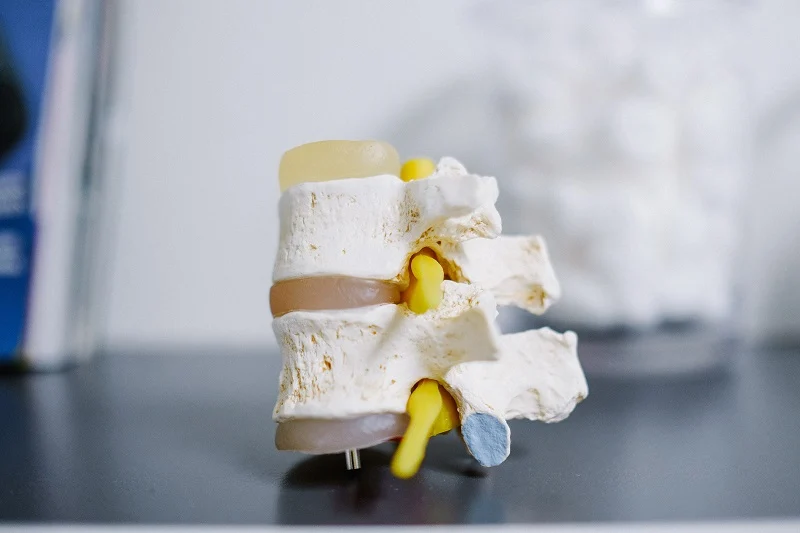
Your spine has 24 movable vertebrae, and a disc sits between each pair. Every disc has two parts:
- The annulus fibrosus, a tough outer ring made of layered fibers
- The nucleus pulposus, a soft, jelly-like center that absorbs shock
When the outer ring weakens or tears, the inner material can bulge or leak out. If it pushes toward the spinal canal or the openings where nerves exit, it can irritate or compress those nerves. A tear in the outer ring alone is called an annular disc tear, and it is often the first step toward a herniation.
What Causes a Herniated Disc?
The most common cause is gradual, age-related wear known as disc degeneration. As we age, discs lose water content and become less flexible, so a minor strain or twist is more likely to cause a tear. Other contributing factors include:
- Lifting heavy objects with your back instead of your legs
- Sudden twisting or bending movements
- Car accidents, falls and sports injuries
- Excess body weight, which adds stress to the lower spine
- Jobs that involve repetitive lifting, bending or long hours of sitting
- Smoking, which reduces the oxygen supply to disc tissue
- Family history and genetics
Many herniations are linked to degenerative disc disease, which slowly weakens discs over the years.
Where Do Herniated Discs Usually Happen?
Herniated discs occur most often in the lower back (lumbar spine), especially at the L4-L5 and L5-S1 levels. These discs carry much of your body weight and bend the most during daily activity.
The second most common area is the neck (cervical spine), usually at C5-C6 and C6-C7. Herniations in the mid-back (thoracic spine) are less common because the rib cage helps stabilize that area.
What Are the Symptoms of a Herniated Disc?
Symptoms depend on where the disc is and whether it presses on a nerve. Some people have a herniated disc on an MRI and feel nothing at all. Others have symptoms such as:
- Lower back herniation: back pain plus pain that shoots down the buttock and leg, often called sciatica. You may also notice leg pain, numbness in the foot or weakness when you stand on your toes or heels.
- Neck herniation: neck pain, pain radiating into the shoulder blade, arm or hand, tingling in the fingers and grip weakness.
- Nerve-related symptoms: burning, electric or pins-and-needles sensations, which doctors call radiculopathy or a pinched nerve.
Pain often gets worse when you sit, bend forward, cough or sneeze.
Is a Herniated Disc the Same as a Bulging, Slipped or Ruptured Disc?
These terms are often used interchangeably, but there are small differences:
- A bulging disc extends past its normal border, but the outer ring stays intact. It is often part of normal aging.
- A herniated disc means the inner material has pushed through a tear in the outer ring.
- A prolapsed disc, ruptured disc and “slipped disc” are common names for the same herniation process.
Discs don’t actually “slip” out of place. The term describes the inner material shifting through the outer layer.
When Is a Herniated Disc an Emergency?
Get emergency care right away if you notice any of these warning signs:
- Loss of bladder or bowel control
- Numbness in the groin, inner thighs or “saddle” area
- Rapidly worsening weakness in the legs or arms
- Trouble walking or loss of balance
In the lower back, these symptoms can point to cauda equina syndrome. In the neck, a large herniation can compress the spinal cord and lead to cervical myelopathy. Both conditions need prompt evaluation by a neurosurgeon.
How Is a Herniated Disc Diagnosed?
Diagnosis starts with a conversation about your symptoms and a physical and neurological exam. Your doctor will check your reflexes, muscle strength, sensation and range of motion. Simple tests, like raising your straightened leg while lying down, can show whether a nerve is irritated.
An MRI is the most useful imaging test because it clearly shows discs, nerves and the spinal cord. X-rays, CT scans or nerve studies such as an EMG may be used to rule out other problems or to pinpoint which nerve is involved. You can learn what to expect at your appointment on our first visit page.
Can a Herniated Disc Heal on Its Own?
Yes, in many cases. According to the Mayo Clinic, symptoms from a herniated disc often improve over time with conservative treatment. The body can gradually reabsorb part of the displaced disc material, and inflammation around the nerve tends to settle.
Many patients feel noticeably better within about six weeks. Staying gently active usually helps more than strict bed rest. If you are curious about the leg-pain side of this, see our related post, Can sciatica go away without surgery?
What Non-Surgical Treatments Help a Herniated Disc?
Most people start with conservative care, which may include:
- Short periods of rest followed by a gradual return to activity
- Anti-inflammatory medication or muscle relaxants
- Physical therapy to strengthen core muscles and improve posture and flexibility
- Epidural steroid or facet block injections to calm nerve inflammation
- A structured pain management plan
- Cryotherapy and activity changes to reduce flare-ups
Our non-surgical care options are designed to relieve symptoms and help you avoid surgery whenever possible.
When Do You Need Surgery for a Herniated Disc?
Surgery may be recommended when:
- Pain and nerve symptoms don’t improve after about 6 to 12 weeks of conservative care
- You have progressive weakness, numbness or loss of function
- Pain is severe enough to keep you from working, sleeping or daily activities
- There are signs of spinal cord or cauda equina compression
The decision is personal and depends on your symptoms, imaging and goals. Our article Do I really need spine surgery? walks through that decision in more detail.
What Surgeries Treat a Herniated Disc?
The right procedure depends on the location and size of the herniation:
- Lumbar disc microsurgery (microdiscectomy) removes the portion of disc pressing on the nerve through a small incision. It is the most common surgery for lower back herniations.
- Laminotomy and laminectomy remove part of the bone to create more room for the nerves.
- Foraminotomy widens the opening where a nerve exits the spine.
- Anterior cervical discectomy and fusion (ACDF) removes a herniated neck disc and stabilizes the segment.
- Artificial disc replacement replaces the damaged disc while keeping motion at that level.
Whenever possible, our surgeons use minimally invasive surgery and computer-assisted surgery, which can mean smaller incisions, less muscle disruption and a quicker return home. Many microdiscectomy patients go home the same day.
How Long Does Recovery Take After Herniated Disc Treatment?
With conservative care, many people improve within several weeks, though full recovery can take a few months. After a microdiscectomy, most patients return to light activity within a few weeks and resume normal activity in about four to six weeks. Fusion procedures generally take longer. Our recovery guide covers what to expect after surgery.
Can You Prevent a Herniated Disc?
You can’t control aging or genetics, but you can lower your risk:
- Lift with your legs and keep loads close to your body
- Strengthen your core and back muscles
- Maintain a healthy weight
- Take breaks from long periods of sitting and use good posture
- Quit smoking
- Stay active with low-impact exercise like walking or swimming
For more general guidance, MedlinePlus from the National Library of Medicine and the National Institute of Neurological Disorders and Stroke offer reliable patient information on herniated discs and back pain.
Where Can I Find a Herniated Disc Specialist Near Me?
If you live in Frisco or nearby communities like Plano, McKinney, Allen, Prosper or Little Elm, American Neurospine Institute is close by. Our neurosurgeons diagnose and treat herniated discs throughout the neck and back, starting with the most conservative option that fits your situation.
Learn more about our approach on our herniated disc treatment page, or call (972) 806-1188 to schedule an appointment at our office on the Dallas Parkway in Frisco, TX.
