Is a Ruptured Disc Behind Your Back, Neck or Leg Pain?
A sharp pain that shoots down your leg or arm, or numbness that will not go away, can point to a ruptured disc. If you are searching for a spine specialist near me in Frisco, TX, American Neurospine Institute can help. Our neurosurgeons start with a careful diagnosis and conservative care. If you need surgery, we use minimally invasive techniques that help you get back to work, family and the activities you enjoy. Call (972) 806-1188 to talk with our team.
What Is a Ruptured Disc?
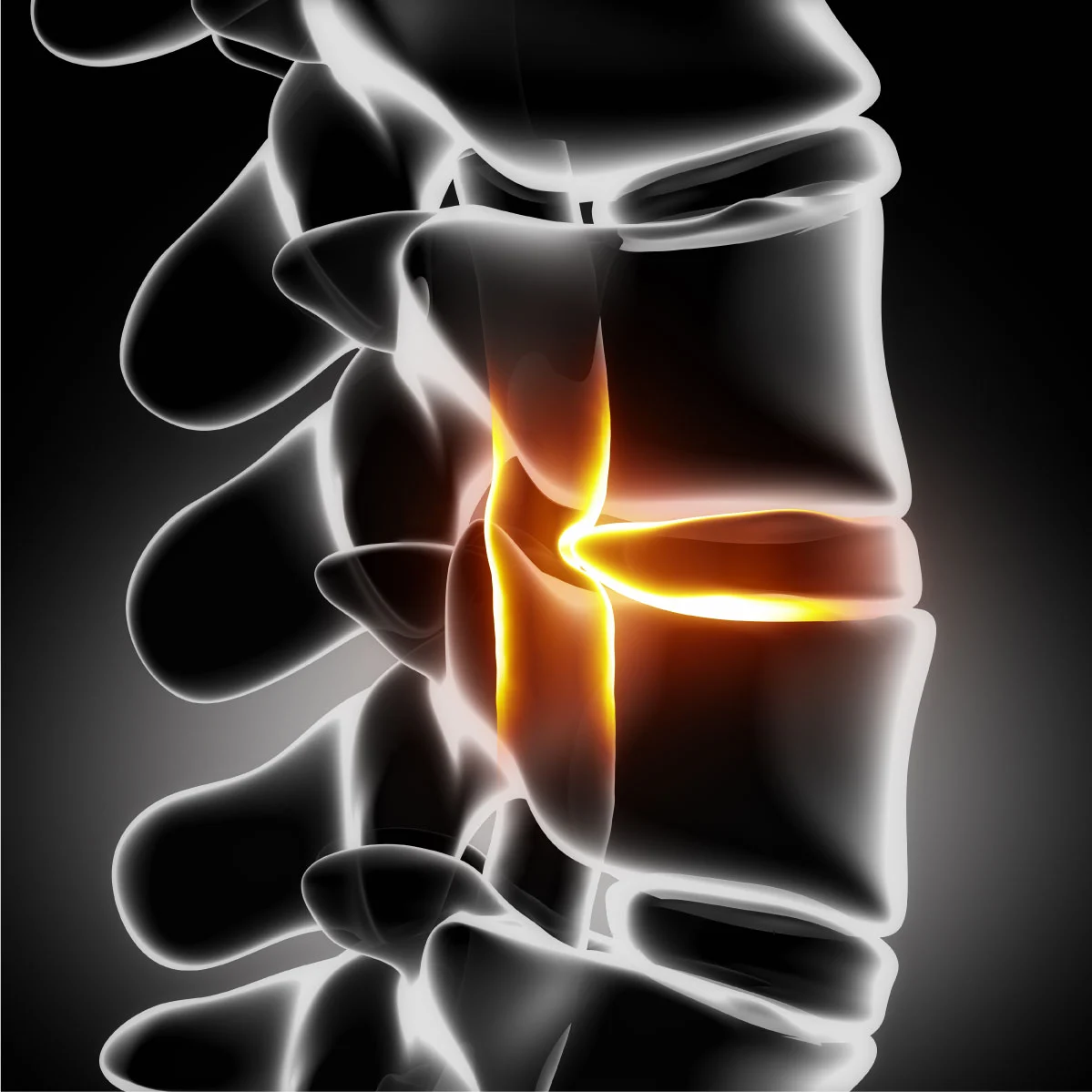
A ruptured disc happens when the soft, gel-like center of a spinal disc breaks through a tear in its tough outer ring. The leaked material can press on or irritate nearby spinal nerves, causing pain, numbness, tingling or weakness. You may also hear it called a herniated disc, a prolapsed disc or a slipped disc. All of these names describe the same basic problem: disc material out of its normal space and crowding the nerves.
Ruptured discs are most common in the lower back (lumbar spine) and the neck (cervical spine). They often develop after years of wear. In some cases they start as a small annular disc tear that grows over time, or as part of degenerative disc disease.
What Causes a Disc to Rupture?
Most ruptured discs come from a mix of age-related changes and everyday strain. As we get older, discs lose water and flexibility, so they crack more easily. Common triggers include:
- Lifting something heavy with a twisting motion
- A sudden fall, car accident or sports injury
- Long hours of sitting or repetitive bending
- Excess body weight that adds load to the lower spine
- Smoking, which reduces blood flow and nutrition to the discs
- Family history of disc problems
What Does a Ruptured Disc Feel Like?
Symptoms depend on where the disc ruptures and which nerve it touches. A lumbar disc rupture often causes sciatica, a burning or electric pain that travels from the buttock down the back of the leg. A cervical disc rupture can cause neck pain that spreads into the shoulder, arm or hand. When a nerve root is compressed, the condition is called radiculopathy, or more simply a pinched nerve.
Which Symptoms Mean You Should See a Neurosurgeon?
- Localized pain: Persistent back pain or neck pain that gets worse when you sit, bend or cough.
- Radiating pain: Pain that travels down an arm or causes leg pain.
- Numbness or tingling: Pins and needles in the hands, feet, arms or legs.
- Muscle weakness: Trouble gripping objects, lifting your foot or climbing stairs.
- Pain that is not improving: Symptoms lasting more than six weeks despite rest and home care.
Get emergency care right away if you suddenly lose bladder or bowel control, have numbness in the groin or inner thighs, or have rapidly worsening leg weakness. These can be signs of cauda equina syndrome, a rare but serious condition that needs urgent treatment.
How Is a Ruptured Disc Diagnosed?
Your visit starts with a conversation about your symptoms, health history and daily activities. Next comes a hands-on exam that checks your reflexes, strength, sensation and range of motion. An MRI is the most useful imaging test for a ruptured disc because it shows soft tissue and nerves clearly. X-rays or CT scans may also help rule out other problems. Our team reviews your images with you so you understand exactly what is going on in your spine.
How Do You Treat a Ruptured Disc Without Surgery?
Most people with a ruptured disc get better without surgery, often within six to twelve weeks. Our first goal is to calm the nerve irritation and help your body heal. Your plan may include:
- Short-term activity changes, not strict bed rest
- Anti-inflammatory medication or short courses of oral steroids
- Targeted physical therapy to strengthen the core and improve posture
- Image-guided epidural steroid injections through our pain management program
- Heat, ice and gentle stretching at home
You can learn more about our conservative options on our non-surgical care page.
When Is Surgery Needed for a Ruptured Disc?
Surgery may be the right step if your pain does not improve after several weeks of conservative care, if you have worsening weakness or numbness, or if nerve compression is affecting your daily life. Our neurosurgeons focus on the smallest effective procedure. Options may include:
- Lumbar disc microsurgery (microdiscectomy) to remove the fragment pressing on the nerve
- Anterior cervical discectomy and fusion (ACDF) for ruptured discs in the neck
- Artificial disc replacement to relieve pressure while keeping motion
- Minimally invasive surgery through small incisions for less muscle disruption and a faster recovery
Why Choose Our Frisco Neurosurgeons?
Dr. Ripul Panchal and the providers at American Neurospine Institute are fellowship-trained in complex and minimally invasive spine care. We treat the full range of disc problems, from first-time ruptures to revision cases. We take time to explain every option, including when surgery is not the best choice. Patients come to our Frisco, TX office from across North Texas, including those looking for a neurosurgeon near Plano or a neurosurgeon near McKinney.
Ruptured Disc FAQs
Is a ruptured disc the same as a herniated disc?
Yes. A ruptured disc, herniated disc, prolapsed disc and slipped disc all describe the inner disc material pushing through a tear in the outer ring and pressing on nearby nerves.
Can a ruptured disc heal on its own?
Often, yes. Many ruptured discs improve within six to twelve weeks as inflammation settles and the body reabsorbs some of the leaked disc material. Physical therapy, medication and injections can ease pain during that time.
How long does it take to recover from a ruptured disc?
With conservative care, most people feel much better within six to twelve weeks. After a minimally invasive microdiscectomy, many patients return to light activity within a few weeks and to full activity in about two to three months.
What should I avoid with a ruptured disc?
Avoid heavy lifting, twisting while bending, and sitting for long periods without breaks. Strict bed rest is not recommended. Gentle walking and guided movement usually help recovery.
When does a ruptured disc need surgery?
Surgery is considered when pain does not improve after several weeks of non-surgical treatment, when weakness or numbness gets worse, or when there is loss of bladder or bowel control, which needs emergency care.
Where can I find a ruptured disc specialist near me in Frisco?
American Neurospine Institute is located at 13136 Dallas Parkway, Suite 540A, in Frisco, TX. We see patients from Frisco, Plano, McKinney, Allen, Prosper, Little Elm and nearby communities. Call (972) 806-1188 to schedule.
Do I need a referral to see a neurosurgeon for a ruptured disc?
Referral requirements depend on your insurance plan. Our team can help you check your coverage when you call to book your appointment.
Ready to Find Out What Is Causing Your Pain?
You do not have to keep living with radiating pain, numbness or weakness. Call (972) 806-1188 or book online to meet with our neurosurgeons in Frisco, TX and get a clear plan for your ruptured disc.
