Could a Needle-Thin Laser Take the Pressure Off Your Nerve?
If a bulging or herniated disc is sending pain down your arm or leg and rest, medication or therapy haven’t helped, you may be wondering whether there’s an option short of traditional surgery. At American Neurospine Institute in Frisco, TX, Dr. Ripul Panchal uses laser disc repair, also called percutaneous laser disc decompression, to shrink the part of a disc that’s pressing on a nerve. The procedure is done through a needle, not an open incision, and most patients go home the same day. If you’re searching for laser disc repair near me in Frisco, Plano, McKinney or the surrounding area, call (972) 806-1188 to find out whether you’re a good candidate.
What Is Laser Disc Repair?
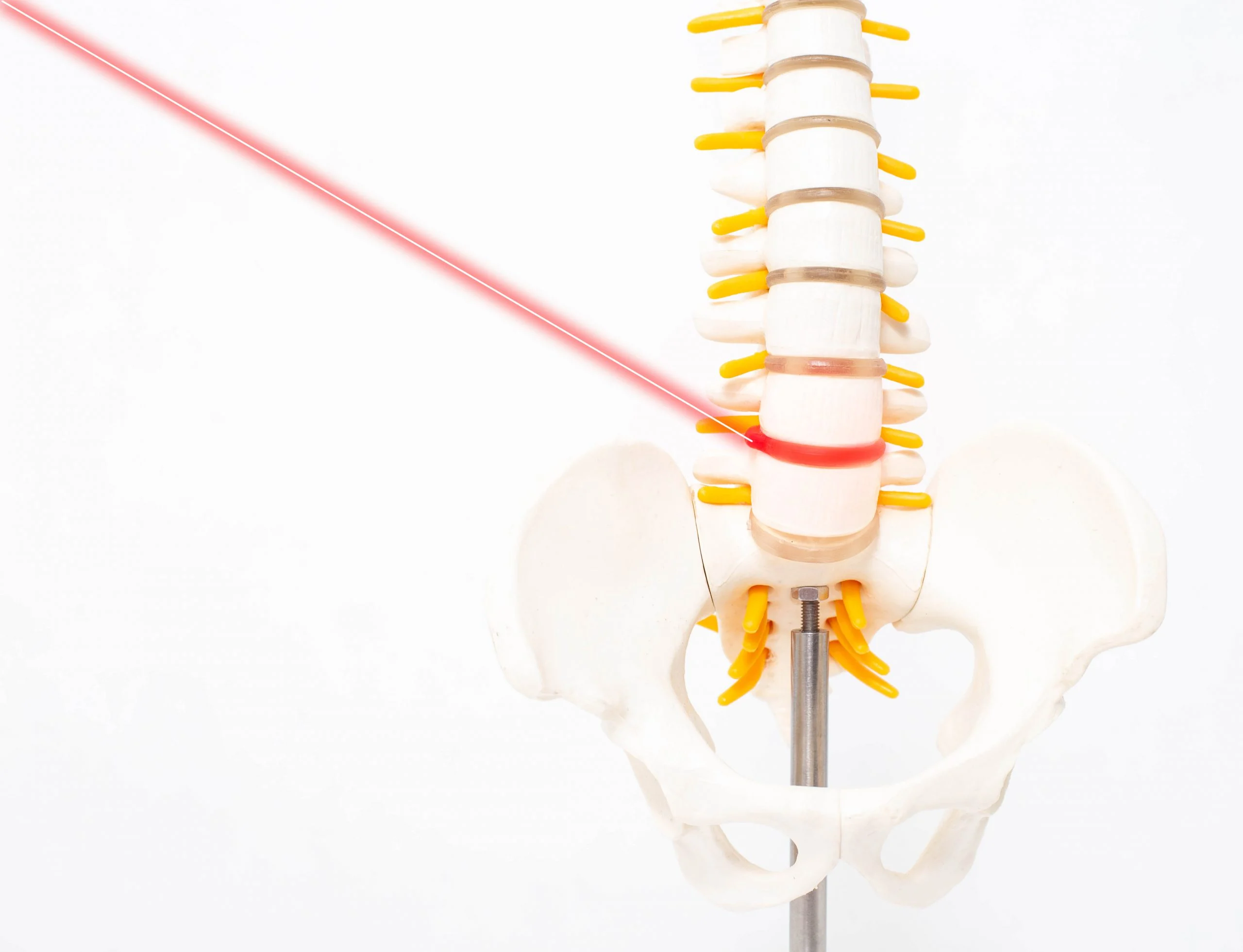
Laser disc repair is a minimally invasive spine procedure in which a thin needle is guided into a damaged disc under live X-ray, and laser energy is used to vaporize a small amount of the disc’s inner material. Removing that small volume lowers pressure inside the disc, which can let a contained bulge or herniation pull back away from the nerve it’s irritating.
The spine’s discs work like cushions between the vertebrae. Each has a tough outer ring and a soft, gel-like center. When the outer ring weakens, the center can push outward and press on a nearby nerve root. That’s what happens with a herniated disc, a prolapsed disc and, in more advanced cases, a ruptured disc. Laser disc repair is designed to relieve that pressure while leaving the surrounding muscle, bone and ligaments intact.
Which Conditions Can Laser Disc Repair Treat?
Laser disc repair works best for contained disc problems, where the disc material is still held inside the outer ring. Dr. Panchal may recommend it for:
- Contained herniated or bulging discs in the lower back or neck
- Sciatica caused by a disc pressing on a lumbar nerve root
- Radiculopathy, with pain, tingling or numbness traveling into an arm or leg
- A pinched nerve from disc material rather than bone spurs
- Select cases of an annular disc tear with associated bulging
If the disc has fully ruptured and a fragment has broken free, or if narrowing comes mostly from bone and thickened ligaments, a different approach such as lumbar disc microsurgery is usually more effective.
What Symptoms Suggest You Might Need Laser Disc Repair?
- Radiating pain: Pain that travels from the back into the buttock and leg, or from the neck into the shoulder and arm.
- Numbness and tingling: Pins-and-needles sensations along the path of a nerve.
- Weakness: Trouble gripping, lifting the foot or climbing stairs.
- Pain with walking or sitting: Leg pain that worsens after standing, walking or sitting for long periods.
- Symptoms that won’t settle: Pain that hasn’t improved after six or more weeks of conservative care.
How Does the Laser Disc Repair Procedure Work?
The procedure is performed on an outpatient basis, typically with local anesthesia and light sedation so you stay comfortable. Using fluoroscopic (X-ray) guidance, Dr. Panchal places a fine needle into the center of the affected disc. A thin laser fiber is passed through the needle, and short pulses of laser energy vaporize a small portion of the disc’s nucleus. The needle is then removed, leaving only a small puncture covered by a bandage. Most procedures take under an hour, and you’ll rest briefly in recovery before going home.
What Are the Benefits of Laser Disc Repair?
- No open incision and no cutting of back muscles
- Same-day, outpatient treatment
- Shorter recovery than traditional open spine surgery
- Lower risk of scar tissue and blood loss
- Can reduce reliance on pain medication
- Preserves the disc and natural spinal motion
Who Is a Good Candidate for Laser Disc Repair?
The best candidates have a contained disc herniation confirmed on MRI, symptoms that match the affected nerve, and pain that hasn’t responded to physical therapy, medication or injections through our pain management program. Laser disc repair is generally not the right choice for severe degenerative disc disease where the disc has collapsed, spinal instability, or major nerve compression causing rapidly worsening weakness. In those situations, Dr. Panchal may discuss minimally invasive surgery, disc replacement or spinal fusion instead.
Why See a Neurosurgeon for Laser Disc Repair in Frisco?
Choosing the right procedure matters as much as performing it well. Dr. Ripul Panchal is a fellowship-trained neurosurgeon who treats the full range of spine conditions, from conservative care to complex reconstruction. Because he performs every option, his recommendation is based on your imaging and symptoms, not on a single technique. Learn what to expect at your first visit and how we support you through recovery.
Questions Patients Ask About Laser Disc Repair
Is laser disc repair painful?
Most patients feel only pressure during the procedure because the area is numbed and light sedation is used. Afterward, mild soreness at the needle site is common for a few days and is usually managed with ice and over-the-counter medication.
How long does it take to recover from laser disc repair?
Many patients walk the same day and return to desk work within a few days. Heavier activity, lifting and sports are usually reintroduced gradually over several weeks, often with guided physical therapy.
How soon will I feel relief after laser disc repair?
Some patients notice less leg or arm pain within days, while others improve gradually over several weeks as nerve inflammation settles. Dr. Panchal will follow your progress at regular check-ups.
What is the difference between laser disc repair and a microdiscectomy?
Laser disc repair works through a needle to shrink a contained disc bulge from the inside. A microdiscectomy uses a small incision to directly remove disc material pressing on the nerve, which makes it better suited to ruptured discs or free fragments.
Can laser disc repair treat neck pain as well as back pain?
Yes. Laser disc decompression can be used for select contained disc herniations in both the lumbar spine and the cervical spine, as long as imaging confirms the disc is the source of the nerve pain.
Is laser disc repair covered by insurance?
Coverage varies by plan and by the specific procedure code. Our team will review your benefits and explain any out-of-pocket costs before your procedure is scheduled.
Where can I find laser disc repair near me in North Texas?
American Neurospine Institute is located at 13136 Dallas Parkway, Suite 540A, in Frisco, TX, and welcomes patients from Plano, McKinney, Allen, Prosper, Little Elm and across North Texas. Call (972) 806-1188 to schedule a consultation.
Ready to Find Out if Laser Disc Repair Is Right for You?
Living with radiating disc pain doesn’t have to be your new normal. Dr. Panchal will review your imaging, talk through every option and help you choose the least invasive path that fits your condition. Call (972) 806-1188 or request an appointment online to get started.
