
Is Your Lower Back Pain Coming From Your SI Joint?
Do you have a deep ache in your low back or buttock that gets worse when you stand up, climb stairs or roll over in bed? The cause may be sacroiliitis, inflammation of the joint that connects your spine to your pelvis. It is often mistaken for a disc problem or sciatica. At American Neurospine Institute, Dr. Ripul Panchal and our team find out exactly where your pain starts and then build a sacroiliitis treatment plan in Frisco, TX that begins with the most conservative options that are likely to work. If you are searching for an SI joint specialist near me, call (972) 806-1188 or book online.
What Is Sacroiliitis?
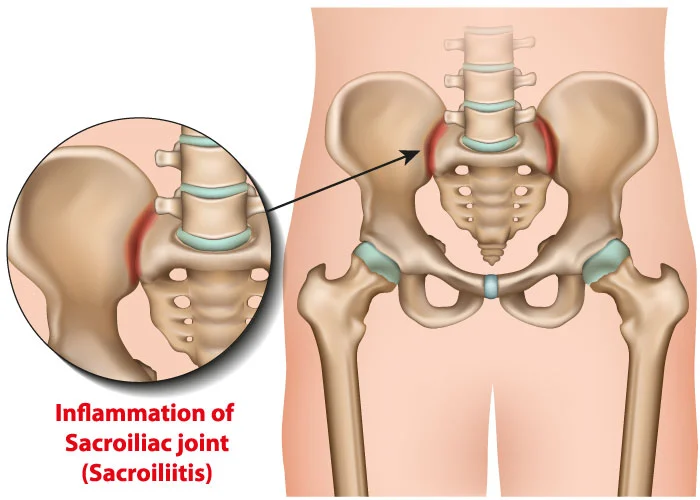
Sacroiliitis is inflammation of one or both sacroiliac (SI) joints. These joints sit where the base of the spine, called the sacrum, meets the iliac bones of the pelvis. They absorb shock and pass force between your upper body and your legs. When an SI joint becomes inflamed, it can cause pain in the lower back, buttocks, hips and sometimes the back of the thigh. Sacroiliitis is a common but often overlooked source of lower back pain.
What Causes SI Joint Inflammation?
Several conditions can irritate or inflame the sacroiliac joint:
- Wear-and-tear arthritis: Over time, osteoarthritis and spinal arthritis can wear down the cartilage that cushions the joint.
- Inflammatory arthritis: Ankylosing spondylitis and related conditions often affect the SI joints first.
- Injury: A fall, a car accident or a sports injury can strain the joint and its ligaments.
- Pregnancy: Hormonal changes, extra weight and a shift in gait can stress the joints.
- Prior lumbar fusion: A spinal fusion can increase the load on the SI joints below it.
- Uneven movement: Leg length differences, scoliosis or an abnormal walking pattern can wear the joint unevenly.
What Does Sacroiliitis Feel Like?
Most patients describe a dull or sharp pain on one side of the low back or buttock, just below the waistline. Symptoms that point toward the SI joint include:
- Pain in the low back, buttock, hip or groin
- Pain that travels into the back of the thigh, usually stopping above the knee
- Stiffness after sitting or first thing in the morning
- Pain that worsens with standing, stair climbing, running or long strides
- Discomfort when rolling over in bed or putting weight on one leg
Because SI joint pain can spread into the leg, it is often confused with sciatica, radiculopathy or a herniated disc. Getting the diagnosis right matters, because each condition calls for a different treatment.
How Do We Diagnose Sacroiliitis?
Diagnosis starts with a detailed history and a hands-on exam. Dr. Panchal uses specific provocation tests that stress the SI joint to see whether they reproduce your pain. X-rays, CT or MRI can show arthritis, inflammation or other spinal problems. In many cases, a diagnostic injection of numbing medicine into the SI joint confirms the joint as the pain source. If your pain improves significantly after the injection, the SI joint is very likely the cause. You can learn what to expect at your appointment on our first visit page.

How Is Sacroiliitis Treated?
Most people with sacroiliitis get better without surgery. Your plan may include:
- Activity changes and anti-inflammatory medication to calm the flare-up.
- Physical therapy to strengthen the core, hips and pelvic muscles and stabilize the joint.
- Pain management, including image-guided SI joint steroid injections to reduce inflammation.
- Radiofrequency ablation to quiet the small nerves that carry pain signals from the joint.
- Bracing with an SI belt for short-term support.
When Is SI Joint Fusion the Right Choice?
If several months of conservative care have not brought lasting relief, and diagnostic injections confirm the SI joint is the source, sacroiliac joint fusion may be an option. Dr. Panchal performs this procedure with minimally invasive techniques and computer-assisted navigation. Through a small incision, implants are placed across the joint to stabilize it and allow the bones to fuse over time. Compared with open surgery, this approach usually means less tissue disruption, a shorter hospital stay and a faster return to daily activities.
Why See a Neurosurgeon for SI Joint Pain?
Low back, buttock and leg pain can come from the SI joint, the lumbar discs, the facet joints or compressed nerves. Often more than one source is involved. As a spine specialist, Dr. Panchal evaluates the whole picture before recommending treatment. That way you do not end up with an injection or procedure aimed at the wrong problem. Patients come to our practice from across Collin and Denton counties, including Plano, McKinney and Prosper. For a broader look at the joint, read our guide on sacroiliac joint dysfunction and how it is treated. The Mayo Clinic also offers an overview of sacroiliitis.
Benefits of Getting the Right SI Joint Treatment
- Less pain when sitting, standing and walking
- Better sleep and easier movement in and out of bed
- A treatment plan matched to your confirmed pain source
- Non-surgical care first, with minimally invasive surgery only when needed
- A return to work, exercise and the activities you enjoy
Explore other back conditions we treat or meet our Frisco neurosurgery providers.
Questions Patients Ask About Sacroiliitis
What is the fastest way to relieve sacroiliitis pain?
For a flare-up, rest from aggravating activities, ice or heat, and over-the-counter anti-inflammatory medication often help within days. When pain persists, an image-guided SI joint steroid injection can provide faster, more targeted relief. It also makes physical therapy easier to complete.
How do I know if my pain is sacroiliitis or sciatica?
SI joint pain usually sits low on one side of the back or buttock and rarely travels below the knee. Sciatica comes from a compressed nerve root and often causes pain, numbness or tingling down the leg into the foot. A physical exam, imaging and sometimes a diagnostic injection can tell the two apart.
Can sacroiliitis go away on its own?
Mild sacroiliitis caused by a strain or by pregnancy often improves with time, activity changes and stretching. Sacroiliitis linked to arthritis or inflammatory disease tends to come and go. It usually responds best to a structured plan with physical therapy and, when needed, injections.
Is walking good for sacroiliitis?
Gentle walking on flat surfaces with shorter strides is usually helpful, because it keeps the joint moving without overloading it. Avoid long strides, steep hills and running during a flare-up. A physical therapist can show you which exercises stabilize the joint safely.
Do SI joint injections work?
SI joint injections serve two purposes. They confirm whether the joint is the pain source, and they deliver anti-inflammatory medication directly into it. Many patients get meaningful relief that lasts weeks to months, which gives them a window to strengthen the supporting muscles.
When should I consider SI joint fusion surgery?
SI joint fusion may be considered when pain has lasted several months despite physical therapy, medication and injections, and when diagnostic injections confirm the SI joint as the source. Minimally invasive fusion uses a small incision and typically allows a quicker recovery than open surgery.
Where can I find an SI joint pain specialist near me in Frisco?
American Neurospine Institute is located at 13136 Dallas Parkway, Suite 540A, in Frisco, TX. Dr. Ripul Panchal sees patients from Frisco, Plano, McKinney, Prosper, Allen and Little Elm. Call (972) 806-1188 to schedule an evaluation.
Ready to Find Out What Is Causing Your Low Back Pain?
You do not have to keep guessing about the pain in your back, hip or buttock. Dr. Ripul Panchal and the team at American Neurospine Institute can pinpoint whether your SI joint is the cause and guide you toward lasting relief. Call (972) 806-1188 to schedule your consultation in Frisco, TX.
