Is Your Upper Back Rounding Forward and Causing Pain?
If your shoulders keep creeping forward, your upper back aches by the end of the day, or someone has pointed out a hunch you can’t straighten, you may be living with kyphosis. At American Neurospine Institute, Dr. Ripul Panchal and our neurosurgery team help patients in Frisco, TX understand why the spine is curving, how far it has progressed, and which treatment fits their life. Options range from posture-focused therapy and bracing to advanced spinal deformity correction. If you’re searching for a kyphosis specialist near me, call (972) 806-1188 to schedule an evaluation.
Request an AppointmentWhat Is Kyphosis?
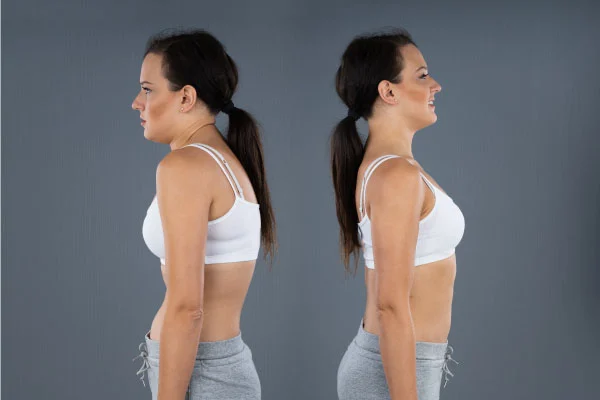
Kyphosis is an excessive forward curve of the upper (thoracic) spine that creates a rounded or hunched back. Every spine has a natural gentle curve in this region, usually between 20 and 45 degrees. When that curve exceeds roughly 50 degrees, it is considered abnormal, or hyperkyphosis. Mild cases may only affect appearance. More severe curves can cause chronic pain, fatigue, reduced lung capacity, and pressure on the spinal cord or nerves.
Kyphosis is one of several complex spine conditions our neurosurgeons treat. It is closely related to scoliosis, which is a sideways curve, and some patients have a combination of both.
What Causes Kyphosis?
Kyphosis can develop at any age. The most common causes include:
- Postural kyphosis: Years of slouching, screen use and weak back muscles can round the upper back. This type is usually flexible and responds well to exercise.
- Scheuermann’s kyphosis: A developmental condition in adolescents where vertebrae grow into a wedge shape, creating a rigid curve.
- Osteoporotic compression fractures: Weakened vertebrae can collapse in front, a leading cause of kyphosis in older adults. Learn more about compression fracture treatment.
- Degenerative changes: Degenerative disc disease and spinal arthritis can gradually collapse the front of the spine.
- Inflammatory disease: Ankylosing spondylitis can fuse the spine in a forward-bent position.
- Congenital kyphosis: Vertebrae that form abnormally before birth.
- Prior spine surgery: A curve can develop above or below a previous fusion, sometimes requiring revision spine surgery.

What Are the Symptoms of Kyphosis?
- Rounded upper back: A visible hump or hunch that doesn’t correct when you stand tall.
- Back pain and stiffness: Aching between the shoulder blades, often worse after standing or sitting.
- Muscle fatigue: Back and neck muscles tire from holding the head upright.
- Forward head posture: Neck strain and headaches as the head shifts ahead of the body.
- Breathing or digestive issues: Severe curves can compress the chest and abdomen.
- Nerve symptoms: Numbness, tingling, weakness or balance problems may signal spinal cord compression.
How Do Our Frisco Neurosurgeons Diagnose Kyphosis?
Your evaluation begins with a conversation about your symptoms, health history and goals, followed by a posture and neurological exam. Standing full-length X-rays let us measure the curve (the Cobb angle) and check overall spinal balance. When nerve involvement or fractures are suspected, MRI or CT imaging gives a detailed view of the spinal cord, discs and bone. Curious what to expect? Read about your first visit.
How Is Kyphosis Treated?
Most patients never need surgery. Treatment depends on the cause, the size and flexibility of the curve, and whether it is progressing or affecting your nerves.
Non-Surgical Kyphosis Treatment
- Physical therapy to strengthen the back extensors and core, stretch tight chest muscles and retrain posture.
- Spinal bracing, especially for growing adolescents with Scheuermann’s kyphosis.
- Pain management, including medication and targeted injections.
- Bone-health treatment for osteoporosis to help prevent new fractures.
Surgical Kyphosis Correction
Surgery may be recommended when a curve is severe or progressing, pain doesn’t respond to conservative care, or the spinal cord is compressed. Options include:
- Kyphoplasty to stabilize painful compression fractures and restore some vertebral height. See how kyphoplasty treats a compression fracture.
- Spinal deformity correction combined with spinal fusion to realign and stabilize the spine.
- Computer-assisted navigation and minimally invasive techniques to improve precision and support recovery when appropriate.
Considering surgery elsewhere? Learn why a second opinion before spine surgery can be valuable. Patients also visit us from nearby communities such as Plano and McKinney.
What Are the Benefits of Kyphosis Treatment?
- Improved posture and spinal alignment.
- Relief from back and neck pain.
- Better breathing, balance and endurance.
- Protection of the spinal cord and nerves.
- A personalized plan built around your goals by Dr. Ripul Panchal and our team.
Questions About Kyphosis
Can kyphosis be corrected without surgery?
Yes, in many cases. Postural kyphosis often improves with physical therapy, strengthening exercises and posture training. Bracing can help adolescents whose spines are still growing. Surgery is generally reserved for severe, progressive or painful curves, or those affecting the nerves.
How much curve is considered kyphosis?
A normal upper back curve measures about 20 to 45 degrees. A curve greater than roughly 50 degrees is typically considered hyperkyphosis. We measure the curve on standing X-rays to track whether it is stable or progressing.
Can kyphosis get worse over time?
It can, especially when caused by osteoporosis, degenerative disc disease or repeated compression fractures. Regular monitoring and early treatment help slow progression and protect your spinal cord.
When should I see a neurosurgeon for kyphosis?
See a specialist if your curve is getting worse, pain doesn’t improve with conservative care, or you notice numbness, weakness, balance problems or trouble breathing. These signs may mean the spine or nerves need closer attention.
Is kyphosis surgery safe?
All spine surgery carries risks, but modern techniques such as computer-assisted navigation and intraoperative nerve monitoring have improved precision and safety. Your surgeon will review the specific risks and benefits for your situation.
How long is recovery after kyphosis surgery?
Recovery depends on the procedure. Kyphoplasty patients often return home the same day and feel relief quickly. Deformity correction with fusion usually involves a hospital stay and several months of healing, with physical therapy to rebuild strength.
Where can I find kyphosis treatment near me in Frisco?
American Neurospine Institute is located at 13136 Dallas Parkway, Suite 540A in Frisco, TX. Call (972) 806-1188 to schedule an evaluation with our neurosurgery team.
Ready to Stand Taller With Less Pain?
You don’t have to accept a worsening curve or daily back pain. Call (972) 806-1188 or request an appointment online to meet with our neurosurgery team in Frisco, TX and get a clear, personalized plan for your kyphosis.
