Why Does Walking or Standing Make Your Legs Ache?
If your legs feel heavy, numb or achy after a few minutes on your feet, and the pain eases once you sit or lean forward, a narrowed spinal canal may be pressing on your nerves. At American Neurospine Institute, Dr. Ripul Panchal and our neurosurgery team help patients in Frisco, TX and across Collin and Denton counties find the cause of canal stenosis and relieve it, starting with the most conservative care that will work and moving to minimally invasive surgery only when you need it. If you’re looking for a spinal stenosis specialist near you, call (972) 806-1188 or request an appointment online.
What Is Spinal Canal Stenosis?
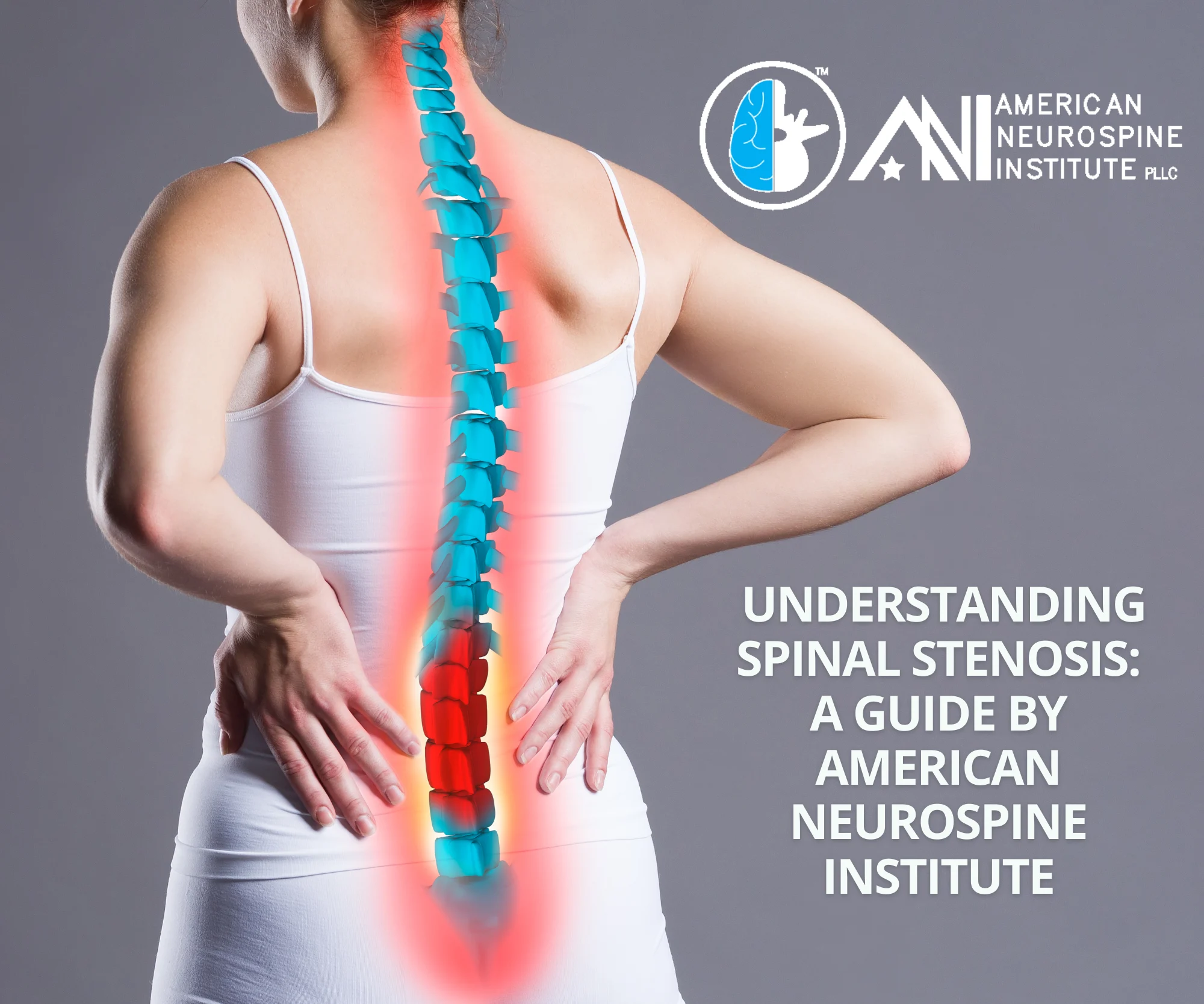
Spinal canal stenosis is a narrowing of the central channel that runs through your vertebrae and protects the spinal cord and nerve roots. When that space shrinks, the nerves get squeezed. The result can be back or neck pain, numbness, tingling, weakness or trouble walking. It most often develops slowly with age, and it can occur in the lower back (lumbar stenosis) or the neck (cervical stenosis). Many patients also hear it called spinal narrowing or simply spinal stenosis.
What Are the Different Types of Canal Stenosis?
Doctors usually describe stenosis by where the narrowing happens:
- Central canal stenosis: narrowing of the main channel that holds the spinal cord or the bundle of nerves in the lower back.
- Lateral recess stenosis: narrowing just off to the side, where nerve roots begin to branch away.
- Foraminal stenosis: narrowing of the small openings where nerves exit the spine, also called foraminal narrowing.
- Cervical vs. lumbar: stenosis in the neck can affect the spinal cord itself. Stenosis in the lower back usually affects nerves heading to the legs.
What Causes the Spinal Canal to Narrow?
Most canal stenosis comes from gradual wear and tear. Over the years, discs lose height and bulge, the facet joints thicken, ligaments stiffen and fold inward, and bone spurs grow into the canal. Common contributors include degenerative disc disease, spinal arthritis, spondylolisthesis (a vertebra slipping forward), herniated discs, prior spine surgery, injury, and in some people a canal that was naturally narrow from birth.

What Symptoms Point to Canal Stenosis?
- Leg pain with walking: aching, cramping or heaviness in the buttocks or legs that improves when you sit or bend forward. This is known as neurogenic claudication.
- Radiating pain: pain traveling into the arms or legs, often similar to sciatica.
- Numbness and tingling: pins and needles in the hands, feet, arms or legs.
- Weakness: trouble gripping, foot drop or legs that feel like they might give out.
- Balance and coordination changes: clumsy hands or an unsteady gait, which can signal pressure on the spinal cord in the neck.
- Back or neck pain: stiffness and aching that worsens with standing or leaning back.
When Should You See a Neurosurgeon About Stenosis?
You should make an appointment if pain or numbness keeps you from walking as far as you used to, if symptoms haven’t improved after several weeks of home care, or if you notice growing weakness in your arms or legs. Stenosis in the neck that presses on the spinal cord can lead to cervical myelopathy, a condition we prefer to catch early. Get emergency care right away for sudden loss of bladder or bowel control, numbness in the groin or inner thighs, or rapidly worsening leg weakness.
How Do We Diagnose Spinal Canal Stenosis?
Your visit begins with a conversation about your symptoms and a hands-on neurological exam that checks your strength, reflexes, sensation and walking pattern. MRI is the most useful test for showing how much the canal has narrowed and which nerves are affected. X-rays can reveal instability or slippage, and CT scans help define bone spurs. Our first-visit guide explains what to bring and what to expect.
How Is Canal Stenosis Treated Without Surgery?
Most people start with conservative care, and many get lasting relief this way. Your plan may include:
- Physical therapy focused on core strength, flexibility and posture that opens up the canal.
- Anti-inflammatory and nerve-calming medications.
- Targeted pain management, including epidural steroid injections.
- Facet block injections when arthritic joints add to the pain.
- Activity changes, such as using a stationary bike or walking with a slight forward lean.
When Is Surgery the Right Choice for Canal Stenosis?
Surgery is considered when symptoms keep limiting your life despite conservative care, or when there’s progressive weakness or spinal cord compression. The goal is decompression, which means making room for the nerves again. Depending on your anatomy, Dr. Panchal may recommend a laminotomy or laminectomy to remove bone and thickened ligament, or a foraminotomy to widen a nerve exit. If the spine is unstable or slipping, decompression may be paired with spinal fusion. Whenever possible, we use minimally invasive surgery and computer-assisted navigation for smaller incisions, less muscle disruption and a quicker return home.
Why Choose Our Frisco Team for Stenosis Care?
Our patients work directly with a fellowship-trained neurosurgeon who treats the full range of spine conditions, from simple nerve compression to complex reconstruction. You’ll get a clear explanation of your imaging, an honest conversation about whether you need surgery, and a plan built around your goals. Learn more about Dr. Ripul Panchal and the rest of our providers. We also see patients from nearby communities, including those searching for a neurosurgeon near Plano or a neurosurgeon near McKinney.
Common Questions About Spinal Canal Stenosis
Is canal stenosis the same as spinal stenosis?
Yes. Canal stenosis is a more specific way of describing spinal stenosis that affects the central spinal canal. Stenosis can also affect the side openings where nerves exit, which is called foraminal stenosis.
Why does leaning forward ease my stenosis pain?
Bending forward slightly opens the spinal canal and takes pressure off the nerves. That’s why many people with lumbar stenosis feel better leaning on a shopping cart or sitting down, and worse when standing straight or walking downhill.
Can spinal canal stenosis get better without surgery?
Many patients manage symptoms well with physical therapy, medication, injections and activity changes. The narrowing itself doesn’t reverse, but pain and function often improve enough that surgery isn’t needed.
Is canal stenosis in the neck more serious than in the lower back?
It can be. Stenosis in the neck may press on the spinal cord and cause hand clumsiness, balance problems or weakness. These signs deserve a prompt evaluation by a neurosurgeon so the cord can be protected.
What surgery is done for spinal canal stenosis?
The most common procedure is a decompression, such as a laminectomy or laminotomy, which removes bone, ligament or bone spurs that crowd the nerves. If the spine is unstable, a fusion may be added. Many of these procedures can be done with minimally invasive techniques.
How long is recovery after stenosis surgery?
Recovery depends on the procedure. Many patients go home the same day or the next day after a minimally invasive decompression and return to light activity within a few weeks. Fusion takes longer, often several months to fully heal.
Where can I find a spinal stenosis specialist near me in Frisco?
American Neurospine Institute treats canal stenosis at our office at 13136 Dallas Parkway in Frisco, TX. Call (972) 806-1188 to schedule an evaluation with our neurosurgery team.
Ready to Walk Farther With Less Pain?
You don’t have to plan your day around leg pain or numbness. Our team will pinpoint what’s narrowing your spinal canal and walk you through every option, from therapy to minimally invasive decompression. Call (972) 806-1188 or request your consultation online.
